Antonello Amelii, Stefano Capaldi, Mattia Russo, Zeno Guardini, Gennaro Sanità, Emanuela Esposito, Irene Olivé, Margherita Maiuri, Luca Dall’Osto, Giulio Cerullo, Gabriele Procaccini and Roberto Bassi.
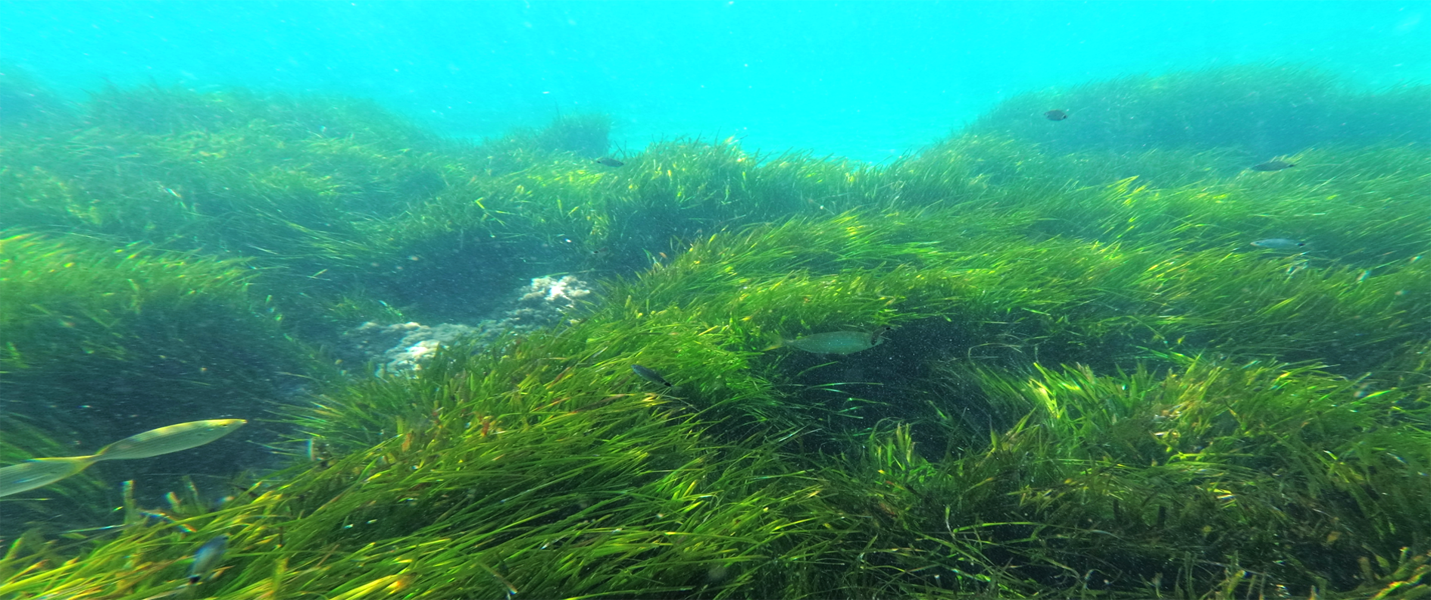
Seagrasses such as Posidonia oceanica are marine flowering plants re-adapted to life underwater, where light is scarce and shifted toward blue wavelengths. Despite these challenging conditions, P. oceanica forms highly productive meadows that are among the world’s most efficient long-term carbon sinks.
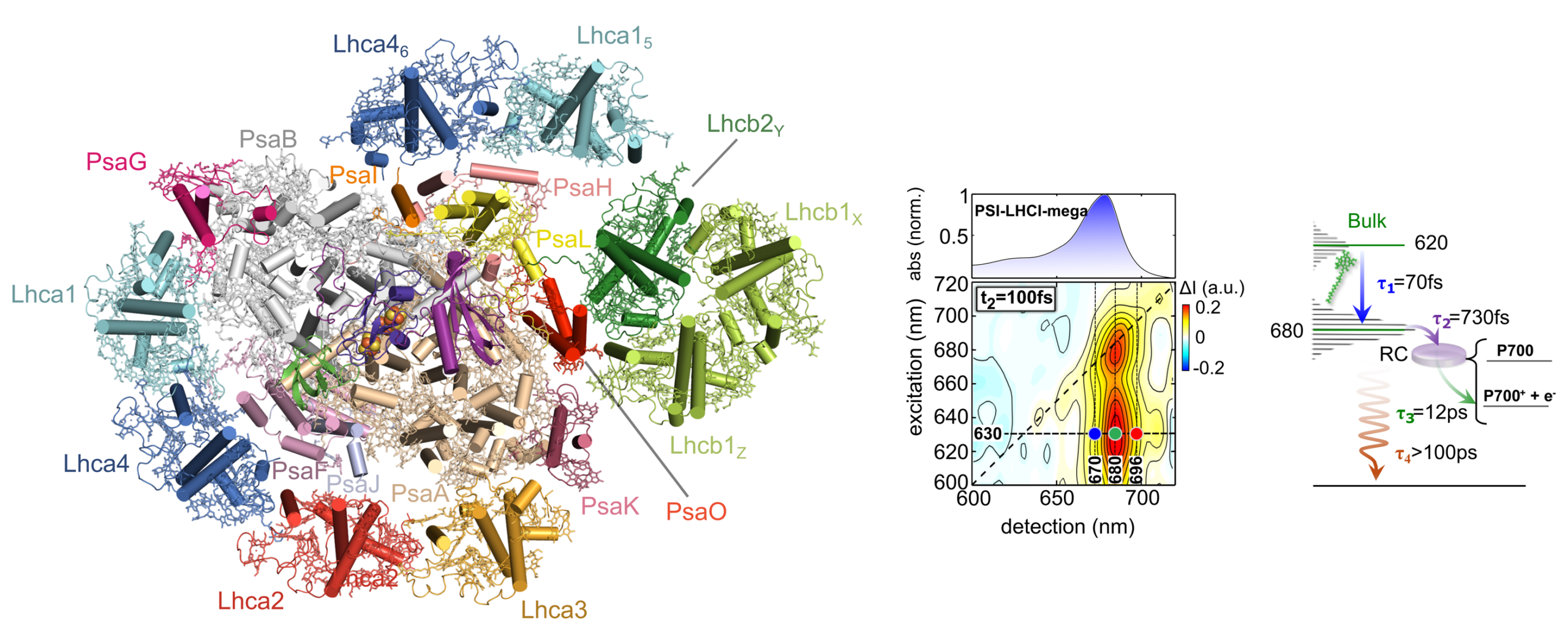
In this study, we combined cryo-electron microscopy, ultrafast spectroscopy, plant physiology, ecology, and biochemistry to uncover how P. oceanica optimizes photosynthesis under dim underwater light. We found that Photosystem I has evolved an expanded light-harvesting antenna while losing low-energy chlorophyll forms that would slow energy transfer.
Our results show that P. oceanica achieves highly light-use efficient by balancing a larger antenna with faster energy transfer. These findings reveal the molecular basis of seagrass adaptation to the marine environment and suggest new strategies for synthetic biology to improve photosynthetic efficiency in crops growing under shaded conditions.